
Licensure · South Carolina
How to Become an LISW-CP in South Carolina (Step-by-Step Guide)
By Karon Hopkins · Updated April 2026 · About 8 min read
If you are searching for how to become LISW-CP in South Carolina, you are not alone. The path from graduate school to independent clinical practice is rigorous—and for good reason. LISW-CP (Licensed Independent Social Worker—Clinical Practice) signals that you have met South Carolina's education, examination, and supervised experience standards so you can provide clinical social work services with greater independence. Whether you are still in your MSW program or already hold your LMSW and need clarity on clinical supervision SC rules, this guide breaks the journey into manageable steps. Always verify details with the South Carolina Board of Social Work Examiners (under the Department of Labor, Licensing and Regulation—LLR), because requirements and forms can change.
Introduction: Why LISW-CP matters in South Carolina
Social workers in South Carolina work across hospitals, schools, community mental health, substance use treatment, and private practice. The LMSW (or equivalent associate-level license) is an important milestone, but many employers and payers expect—or require—advanced licensure for certain clinical roles. Moving from LMSW to LISW-CP in South Carolina typically involves additional supervised clinical experience, a clinical-level national exam, and a complete application package that demonstrates you meet the Board's standards. Understanding the sequence early helps you choose supervisors, jobs, and continuing education that align with your goals.
Candidates often underestimate how much documentation and planning matter. Hour logs, supervision contracts, job duties that qualify as clinical social work, and verification forms are easier to maintain when you build habits from day one of your associate license. If you wait until the end of your supervision period to organize paperwork, you risk delays—or the stress of reconstructing months of work. Treat your licensure pathway as a professional project with milestones, the same way you would manage a complex case plan.
Step 1: Complete your MSW from a CSWE-accredited program
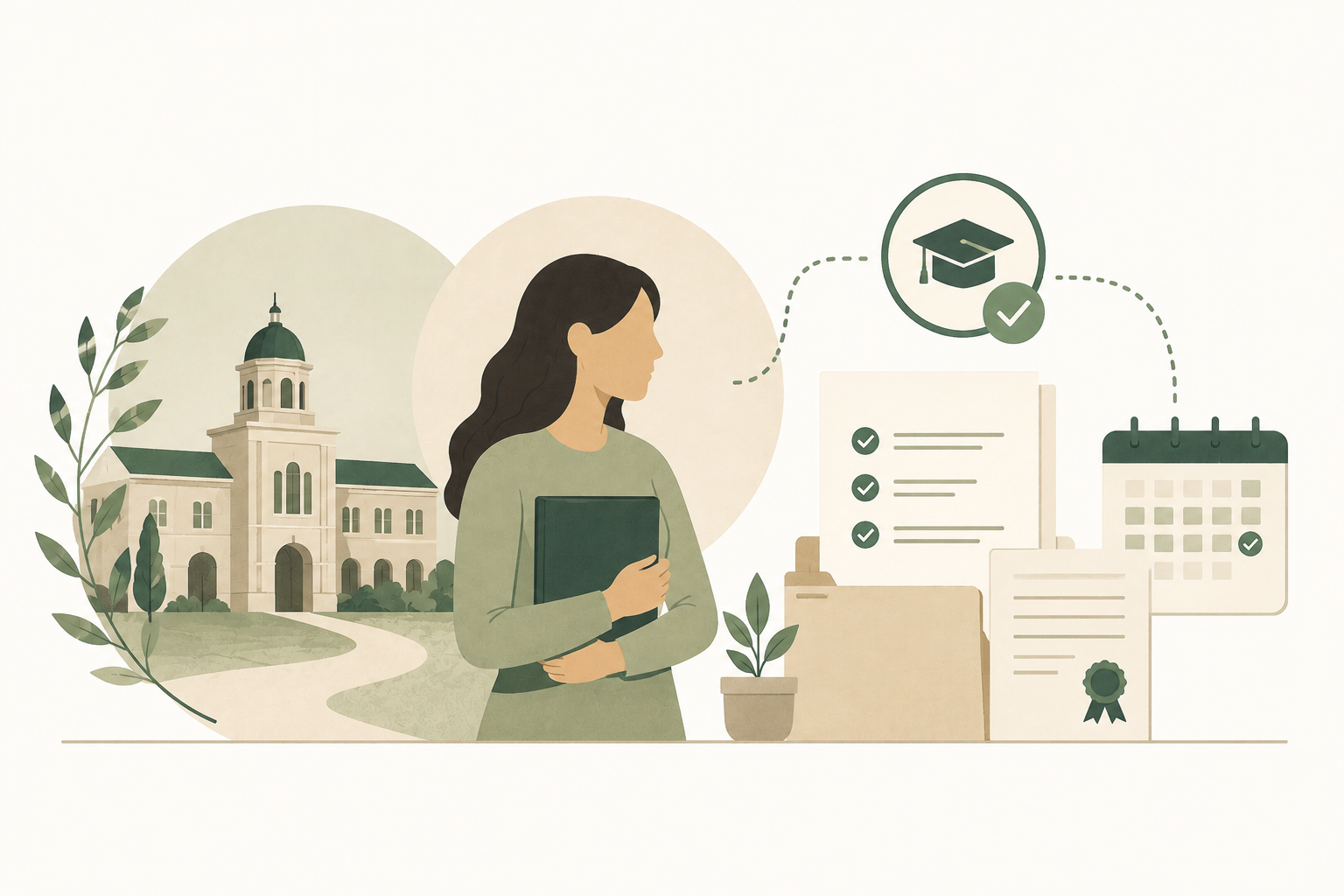
Your first major requirement is a Master of Social Work (MSW) from a program accredited by the Council on Social Work Education (CSWE). CSWE accreditation matters because state licensing boards—including South Carolina—use it as a baseline assurance that your degree meets nationally recognized social work education standards.
Finding approved programs in South Carolina
South Carolina is home to several CSWE-accredited MSW programs at public and private institutions (for example, programs affiliated with major universities across the state). The exact list changes over time, so use the CSWE directory of accredited programs and filter by South Carolina rather than relying on an informal list. If you earned your MSW out of state, you can still apply in South Carolina as long as your program was CSWE-accredited at the time you graduated—confirm transcript and verification requirements in the Board's instructions.
- Request official transcripts and keep documentation of field practicum hours.
- Save syllabi for clinical coursework if the Board requests course descriptions.
- Plan early for the examinations required for associate licensure (covered in Step 2).
If you are still choosing a graduate program, compare field placement support, clinical electives, and alumni outcomes—not only tuition. Programs that emphasize assessment, evidence-based interventions, and ethical documentation tend to prepare students for both early associate practice and the eventual leap to independent clinical responsibility. That foundation pays off when you sit for the clinical exam and when you defend your clinical reasoning in supervision.
Step 2: Obtain your LMSW (associate license) in South Carolina
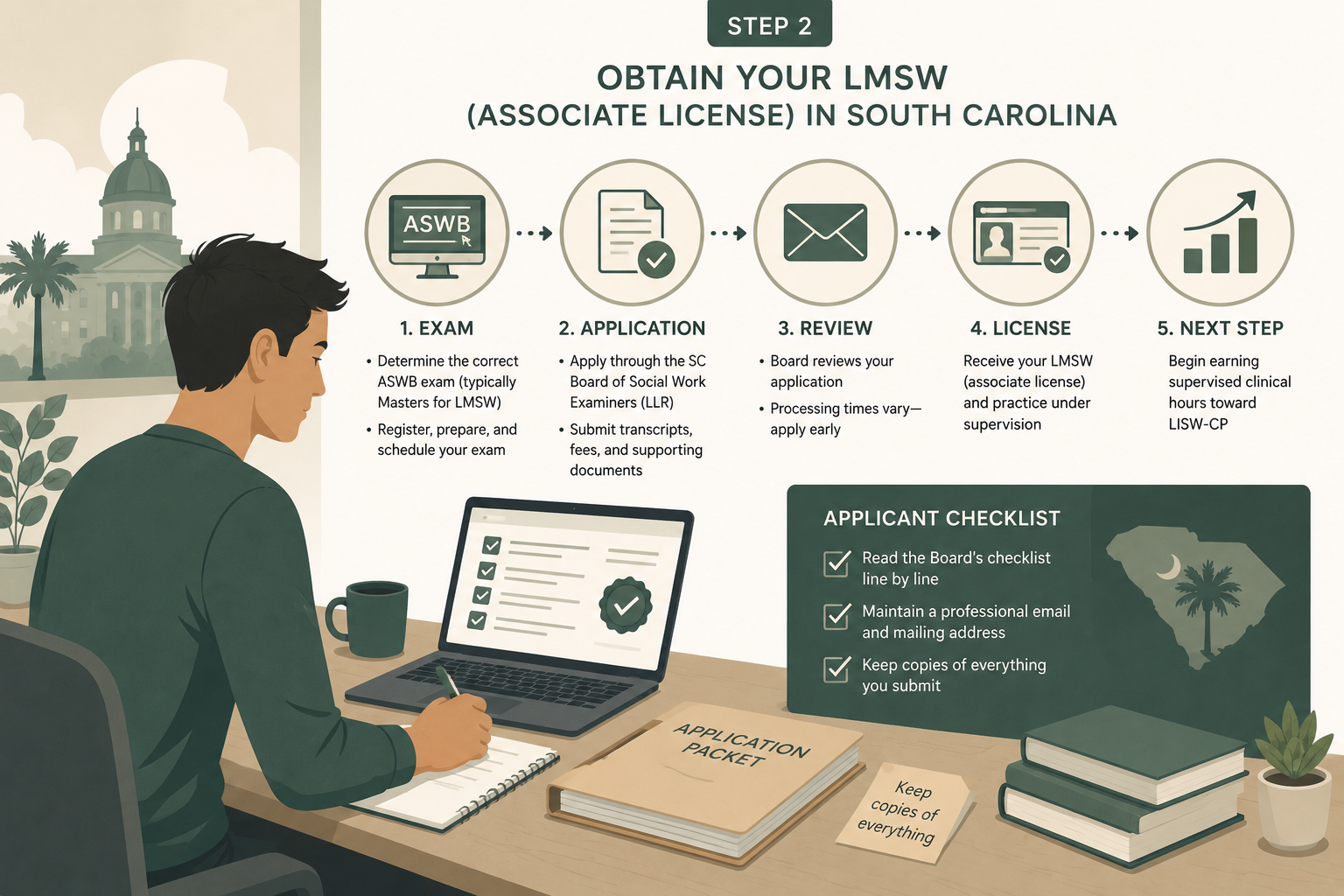
Before you can accumulate the supervised experience that counts toward LISW-CP, you generally need to be licensed at the appropriate associate level while practicing under supervision. In South Carolina, that pathway for many MSW graduates is the LMSW, which requires meeting the Board's education standards and passing the correct Association of Social Work Boards (ASWB) examination for your category.
Exam and application basics
The ASWB offers multiple exam categories (masters, advanced generalist, clinical, etc.). Which exam you take first depends on your state's rules for the license you are pursuing—typically the Masters exam for LMSW candidates in many jurisdictions. Register and prepare through ASWB and approved prep resources, and schedule your exam when your application is cleared by the Board.
To apply through the South Carolina Board of Social Work Examiners, use the current application packet on LLR's website. Expect to submit transcripts, fees, and any supporting documentation the Board requests. Processing times vary, so apply well before job start dates that require an active license.
- Read the Board's checklist for LMSW applicants line by line.
- Maintain a professional email and mailing address for Board correspondence.
- Keep copies of everything you submit.
Many new graduates benefit from talking with colleagues who recently completed the same application. Just remember: peer advice is not a substitute for the official instructions on LLR's site. If something in your history is complicated—such as licensure in another state, a gap in employment, or disciplinary questions—consider addressing it proactively with the Board according to their process rather than hoping it will not surface later.
Step 3: Accumulate supervised clinical experience hours
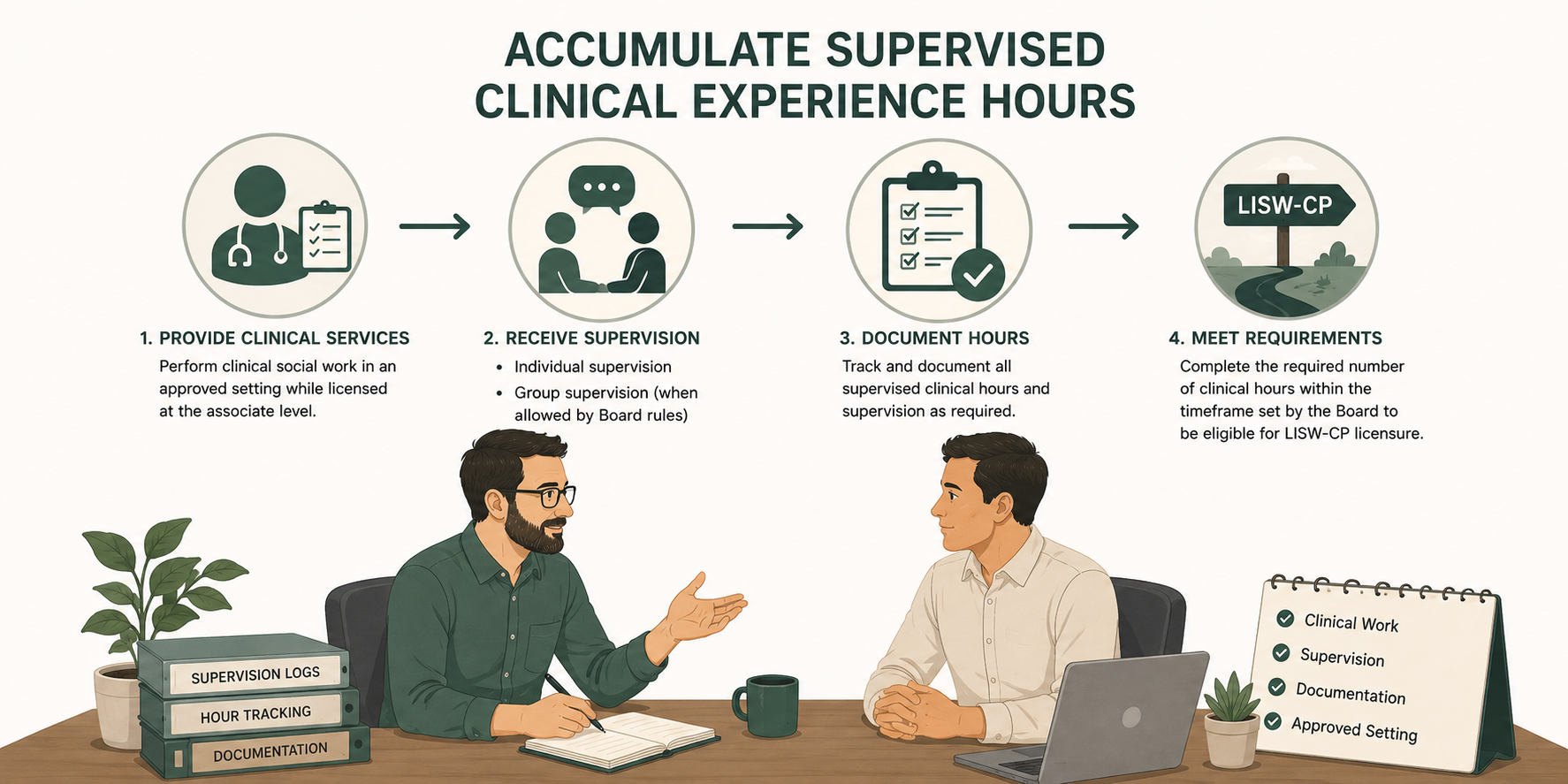
Supervised experience is the bridge between associate licensure and LISW-CP. South Carolina specifies how many hours you need, what activities count as clinical social work, how supervision must be documented, and the timeframe in which hours must be completed. Because those rules are detailed and can be updated, download the current LLR/Board guidance rather than relying on informal advice alone.
What usually counts—and what to clarify with the Board
In most states, countable hours are tied to qualifying activities performed while you hold the correct license, under an approved supervisor, in an acceptable setting. You may need a certain ratio of individual supervision to direct client contact. Group supervision sometimes counts toward a portion of the requirement when it meets Board rules. Your employer may also have training requirements that are separate from licensure—both matter, but they are not always the same thing.
Because the Board publishes the authoritative totals and definitions, avoid locking yourself into a job that cannot provide qualifying hours. During interviews, ask how the organization documents supervision, how often you will meet individually with a board-approved supervisor, and whether your proposed duties align with clinical social work as defined for licensure. A supportive workplace can accelerate your path; a misaligned role can leave you employed but stuck on hours that do not move you toward LISW-CP.
If you are comparing clinical supervision SC options, look for a supervisor who is not only knowledgeable but also organized about documentation, ethics, and the realities of your practice setting. Karon Hopkins, LISW-CP/S, offers structured individual and group supervision for LMSWs working toward independent licensure, with a focus on addictions, trauma, and behavioral health. You can learn more about formats, frequency, and rates on the dedicated clinical supervision South Carolina page.
Step 4: Find an approved clinical supervisor in South Carolina

Not every experienced clinician qualifies as your supervisor for LISW-CP hours. In South Carolina, an approved clinical supervisor must meet criteria defined by the Board—often including holding an advanced clinical license, completing supervision training, and complying with any registration or reporting the Board requires. Before you commit months of work, confirm that your proposed supervisor meets the Board's definition for your specific pathway.
What to look for in a supervisor
- Board approval: Verify status and documentation with LLR, not assumptions.
- Competence in your setting: Supervisors who understand community mental health, private practice, or substance use treatment can speak your language.
- Clear structure: Expect agreements, predictable scheduling, and ethical documentation.
- Fit: You want challenge and support—especially if you carry trauma- or addiction-heavy caseloads.
If you want supervision that balances accountability with encouragement—and emphasizes skills you can use in real sessions—explore LISW-CP supervision with Karon Hopkins and book a consultation to confirm fit.
Step 5: Pass the clinical-level ASWB exam and apply for LISW-CP
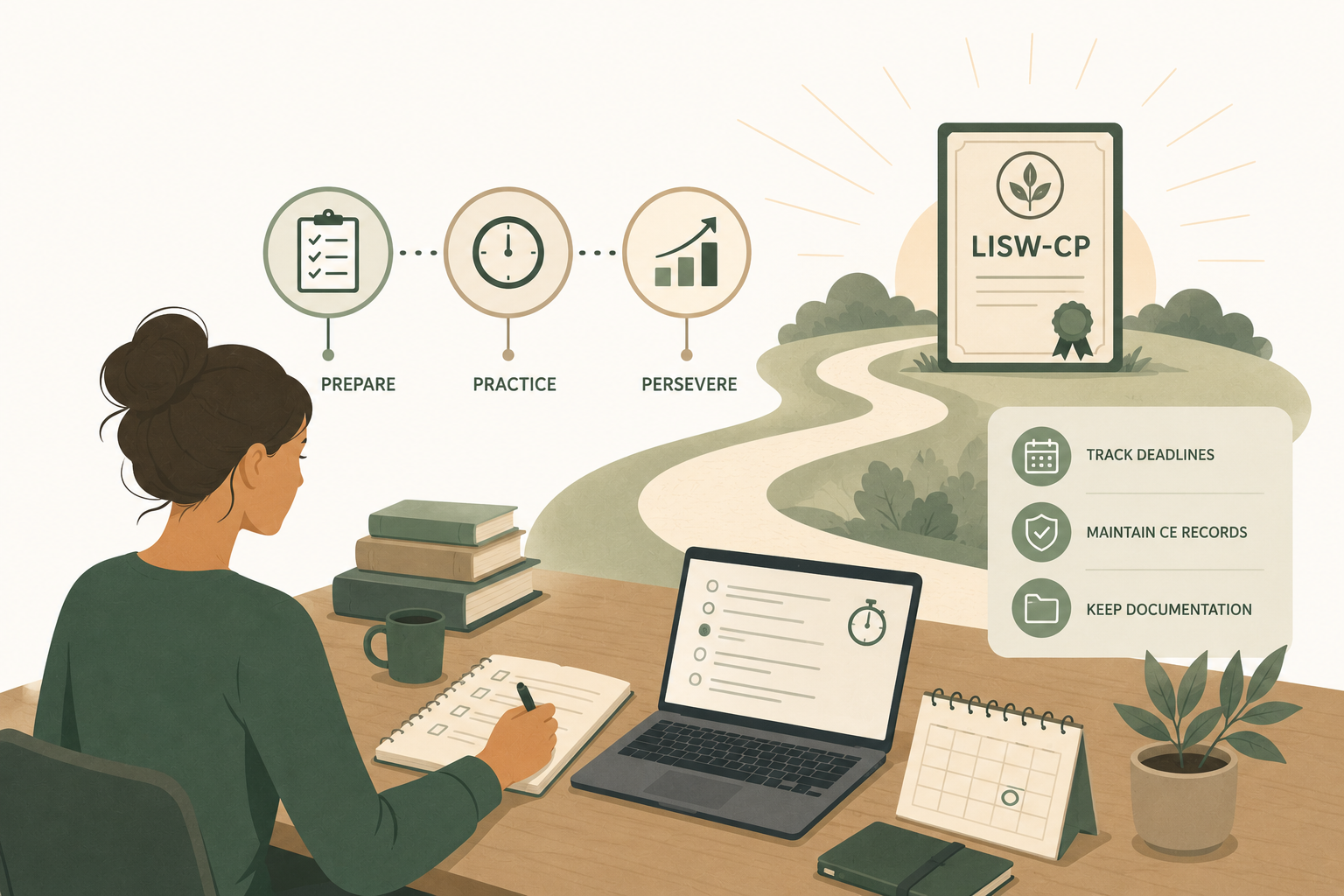
The advanced clinical step for many candidates is passing the ASWB Clinical exam (often colloquially discussed alongside "LCSW-style" preparation, though South Carolina's license title is LISW-CP). Preparation typically includes a review of ethics, assessment, diagnosis, intervention, and clinical decision-making, plus timed practice exams. Give yourself a realistic study window if you are working full time.
Final application to the Board
When your supervised hours, exam results, and fees align with Board requirements, submit your LISW-CP application package. Double-check that supervision verification forms match the Board's current templates. Respond promptly to any requests for additional information—delays often come from incomplete paperwork, not from the Board being difficult.
Exam preparation is both content and stamina. Build a study schedule that includes ethics scenarios, risk assessment, crisis planning, and diagnostic reasoning. Many candidates use a blend of formal prep courses, practice questions, and study groups. If anxiety interferes with performance, address it as part of your plan—sleep, pacing, and realistic practice tests matter as much as memorization.
- Track deadlines and renewal dates once licensed.
- Maintain CE records according to South Carolina rules.
- Keep supervision contracts and hour logs even after licensure.
Conclusion: Get support on the LMSW to LISW-CP path
Learning how to become LISW-CP in South Carolina is a sequence: CSWE-accredited MSW, associate licensure and the right ASWB exam, high-quality supervised experience with an approved clinical supervisor, then the clinical exam and a complete Board application. The process asks a lot of you—but it also prepares you to practice independently with clarity and integrity.
If you are an LMSW who wants supervision that strengthens your clinical judgment in addictions, trauma, and behavioral health settings, Karon would welcome a conversation. Visit the clinical supervision South Carolina page to review rates, formats, and next steps, or use the consultation request form below. Investing in the right clinical supervision SC relationship is one of the most important decisions you will make on the road to independent practice—choose someone who will honor your growth and hold you to the standard your future clients deserve.
Request LISW-CP supervision in South Carolina
Same consultation request as our dedicated clinical supervision page—tell us about your license status, supervision needs, and goals.
✉️ Consultation Request Form
Simply fill out the brief fields below and Karon Hopkins will be in touch with you soon, usually within one business day. This form is safe, private, and completely free.